The Hidden Science in Your Home: Everyday Phenomena Explained
Explore the hidden science of dust, odors, mold, and other phenomena in your home, with tips to improve your living environment using scientifically backed methods.
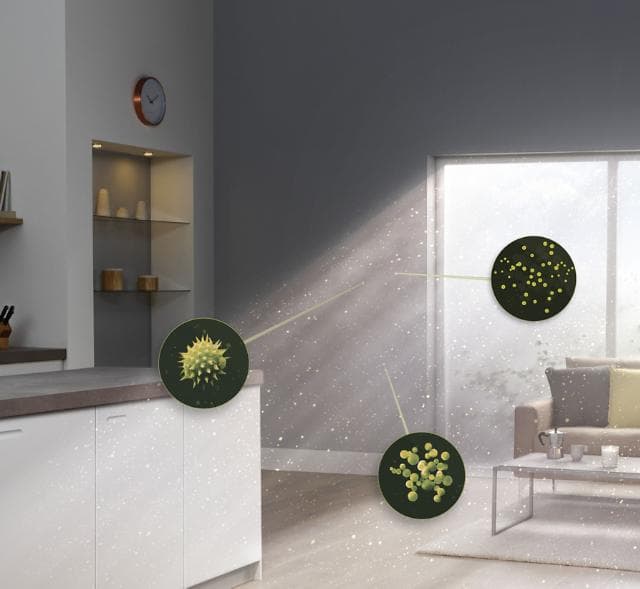
The Hidden Science Behind Everyday Things in Your Home
Our homes are more than just places to relax — they're dynamic environments where fascinating scientific phenomena occur every single day. From the way dust accumulates on your shelves to the static shock from your doorknob, from the way certain smells seem to never leave your carpets to the reason your bathroom keeps growing mold no matter how often you clean it — science is at work in every corner of your house.
Understanding these phenomena doesn't just satisfy curiosity. It gives you practical tools to keep your home healthier, cleaner, and more comfortable — and helps you understand why professional cleaning addresses problems that DIY efforts often can't fully resolve. Here's the science behind seven of the most common home environment questions, and what you can actually do about each one.
1. Why Does Dust Come Back the Moment You Finish Cleaning?
This is one of the most universally frustrating home maintenance experiences — you clean every surface thoroughly, and within days the dust is back as if you never touched it. The reason is more interesting than most people realize.
Household dust isn't primarily outdoor dirt tracked inside. It's a complex mixture of dead skin cells (humans shed roughly 30,000–40,000 skin cells per hour), textile fibers from clothing and furniture, pollen, pet dander, food particles, and microscopic debris from everyday activity. Homes with pets, children, or high foot traffic generate significantly more dust per day than quieter households.
What makes dust so persistent is its weight — or lack of it. Dust particles are extraordinarily lightweight, which allows them to remain airborne for extended periods before finally settling. The moment air currents disturb them — from HVAC systems, foot traffic, opening doors, or even sitting down on a sofa — they become airborne again and redistribute throughout the space.
This is why dusting with a dry cloth often just moves dust from one surface to another rather than removing it. The most effective dust management approach combines several strategies:
Microfiber cloths for dusting — their electrostatic properties trap particles rather than redistributing them
HEPA-filter vacuums — rated to capture particles as small as 0.3 microns, removing fine dust from carpets and upholstery rather than recirculating it
HEPA filters in HVAC systems — intercepting airborne particles before they settle
Air purifiers in high-traffic areas — continuous filtration between cleaning sessions
Regular professional deep cleaning — targeting the hard-to-reach accumulation zones that routine cleaning misses entirely
For homes across Denton County dealing with North Texas dust and seasonal pollen, the independent cleaning professionals available through Maid Up Cleaners specialize in deep cleaning services that target exactly these hidden accumulation zones — delivering results that standard cleaning simply can't match.
2. Why Do Some Odors Linger for Days or Weeks?
Ever notice that pet odors, cooking smells, or smoke seem to take up permanent residence in your home regardless of how often you clean? The science behind persistent odors explains why surface cleaning rarely solves the problem.
Odors are caused by volatile organic compounds (VOCs) — molecules that evaporate at room temperature and interact with your olfactory receptors. Some odor molecules, like those produced by garlic, fish, pet urine, and tobacco, are highly volatile and spread rapidly through the air. The persistence problem occurs when these molecules bond with the porous fibers of soft materials — carpets, upholstery, curtains, mattresses, and even drywall.
Once embedded in fibers, odor molecules are largely inaccessible to surface cleaning. You can spray an air freshener and mask the smell temporarily, but the source remains bonded to the material beneath. Humidity and temperature amplify the problem — warmer, more humid air increases the mobility of odor molecules, which is why a room that smelled fine in winter can smell strongly in summer.
Effective odor elimination requires addressing the source material, not just the air:
Baking soda applied to carpets and upholstery absorbs odor molecules rather than masking them — leave for 15–30 minutes before vacuuming
White vinegar solutions on hard surfaces neutralize many common household odor compounds
Activated charcoal placed in enclosed spaces (closets, cars, basements) continuously absorbs VOCs
Enzyme-based cleaners break down organic odor sources — particularly effective for pet urine and biological odors
Professional deep cleaning of carpets and upholstery physically removes embedded odor molecules rather than masking them
Maid Up Cleaners connects Denton County homeowners with independent cleaning professionals who provide deep cleaning services designed to eliminate odor-causing particles at the source — not just mask them.
3. The Science of Mold: Why Humidity Is Your Home's Invisible Enemy
Mold is one of the most common and most misunderstood home health hazards. Understanding the science of how it grows makes it far easier to prevent — and explains why certain cleaning approaches work while others don't.
Mold spores exist naturally in virtually every home's air at low concentrations. Under normal conditions they're harmless — spores need three things to germinate and grow into visible mold colonies: moisture, organic material to feed on, and temperatures between roughly 40°F and 100°F. Most homes provide two of those three conditions at all times, which means moisture control is the critical variable.
Relative humidity above 60% creates conditions where moisture condenses on cool surfaces — behind appliances, under sinks, inside wall cavities, on shower grout, and around window frames. Once mold establishes a colony it grows rapidly, producing additional spores and releasing mycotoxins that degrade indoor air quality and trigger respiratory symptoms, allergic reactions, and in prolonged exposure cases, more serious health effects.
The areas of highest mold risk in most homes are bathrooms, kitchens, basements, and anywhere with persistent condensation or water intrusion.
Prevention and management strategies:
Maintain indoor humidity between 30–50% using dehumidifiers or air conditioning
Ventilate bathrooms and kitchens during and after use — exhaust fans should run for 20+ minutes after showers
Fix water leaks promptly — even slow, minor leaks create persistent moisture conditions
Use mold-resistant grout sealants and paints in high-humidity areas
Clean moisture-prone surfaces regularly with solutions that address mold at the cellular level, not just the visible surface
Address visible mold promptly — surface mold is the visible sign of a larger colony that often extends beneath the surface
For homes where mold has already established itself in grout lines, caulking, or tile — connecting with a professional cleaning service through Maid Up Cleaners is the most effective way to address the problem thoroughly and prevent rapid regrowth.
4. Temperature and Bacteria: Is Your Home's Climate Helping Germs Thrive?
Your home's temperature directly influences how quickly bacteria multiply on everyday surfaces — and the numbers are more striking than most homeowners realize.
Most common household bacteria — including E. coli, Salmonella, and Staphylococcus — thrive at temperatures between 40°F and 140°F, a range that food safety scientists call the "danger zone." Within this range, bacteria can double in population every 20 minutes under ideal conditions. At typical room temperatures of 68–72°F, a single bacterium can become more than a million in under 7 hours.
The highest-risk locations in most homes are those that combine warmth with moisture and organic material — kitchen sponges (which can harbor millions of bacteria per square centimeter), sink drains, cutting boards, bathroom faucet handles, and toilet flush handles. These surfaces are touched repeatedly throughout the day, making cross-contamination a constant concern.
Viruses behave differently — many respiratory viruses like influenza survive longer on cool, dry surfaces, which partially explains the seasonal pattern of cold and flu.
Practical management approaches:
Disinfect high-touch surfaces daily during illness season — door handles, light switches, faucet handles, remote controls
Replace kitchen sponges weekly or sanitize in the microwave (wet, 2 minutes) to significantly reduce bacterial load
Keep cutting boards designated by food type (raw meat vs. vegetables) and sanitize between uses
Cool your home with air conditioning in summer — lower temperatures measurably slow bacterial multiplication rates
Prioritize bathroom and kitchen deep cleaning regularly — these are the bacterial hotspots that routine cleaning addresses superficially at best
For thorough sanitization of these high-risk zones, the independent cleaning professionals available through Maid Up Cleaners bring professional-grade disinfecting solutions that address bacterial contamination well beyond what standard household products achieve.
5. Static Electricity: The Shocking Science Behind Winter Zaps
The static shocks that seem to multiply in winter — touching doorknobs, pulling off sweaters, even just walking across carpet — have a straightforward scientific explanation that also connects directly to dust accumulation and air quality.
Static electricity occurs when electrons transfer between two surfaces through friction. When you walk across carpet in socks, electrons transfer from the carpet fibers to your body, giving you a net negative charge. When you touch a conductive surface like a metal doorknob, the built-up electrons discharge rapidly — that's the shock.
The reason this happens more in winter is humidity. Moisture in the air acts as a natural conductor, allowing electron charges to dissipate gradually before they build to the level of a noticeable shock. Dry winter air removes this pathway, allowing charges to accumulate. Homes with forced-air heating are particularly prone because the heating process further reduces indoor humidity.
The static electricity connection to dust is direct — charged surfaces attract oppositely-charged dust particles, which is why television screens, synthetic fabrics, and carpets accumulate dust faster than other surfaces.
Management strategies:
Use a humidifier in dry rooms during winter months — maintaining 40–50% humidity significantly reduces static buildup
Choose natural fiber materials (cotton, wool, bamboo) over synthetic ones — natural fibers generate less static friction
Add anti-static mats near doorways and in areas where static shocks are frequent
Keep indoor humidity consistent year-round — this benefits dust management, mold prevention, respiratory health, and static reduction simultaneously
6. Why Carpets Accumulate Dirt Faster Than Any Other Surface
If you've noticed that your carpet seems to attract dirt like a magnet compared to hardwood or tile floors, the observation is scientifically accurate — and the mechanism involves both physical structure and electrostatics.
Carpet fibers create an enormous amount of surface area relative to the floor space they occupy. A high-pile carpet has dramatically more total fiber surface area than the equivalent smooth floor, giving dust, dirt, pollen, pet dander, and debris exponentially more points of contact to cling to. Particles that would slide off a hard floor settle into fiber gaps where air currents and foot traffic can't easily dislodge them.
The electrostatic factor compounds this — as discussed above, carpets accumulate static charge that actively attracts oppositely-charged dust particles. In dry climates and during winter, this effect is amplified.
The practical consequence is that carpets require more rigorous cleaning than their appearance suggests. A carpet can contain significantly more embedded contamination than it visually appears to — which is why carpets in homes with allergy sufferers can trigger symptoms even when the carpet looks clean.
Effective carpet management:
Vacuum high-traffic areas at minimum twice weekly with a HEPA-filter vacuum
Address spills immediately — liquid penetrates carpet fibers rapidly and reaches the backing where mold and bacteria can establish
Use entrance mats to intercept outdoor dirt before it reaches carpet zones
Schedule professional deep carpet cleaning at least annually — professional equipment reaches embedded contamination that consumer vacuums cannot
The independent cleaning professionals available through Maid Up Cleaners provide specialized carpet cleaning services across Aubrey, Little Elm, and greater Denton County — removing the embedded allergens, bacteria, and debris that keep carpets from ever feeling truly clean between professional sessions.
7. How Light Affects Your Mood, Energy, and Productivity at Home
Light is the most underappreciated environmental variable in most homes — and its effects on mood, energy levels, sleep quality, and cognitive performance are among the most robustly documented findings in environmental psychology.
The mechanism is biological. Exposure to natural light — particularly in the blue-spectrum wavelengths that dominate morning sunlight — suppresses melatonin production and increases serotonin synthesis, promoting alertness, positive mood, and cognitive clarity. As light decreases in the evening, melatonin production increases and the body prepares for sleep.
Homes with inadequate natural light — or homes where artificial lighting doesn't compensate effectively — can subtly but meaningfully disrupt these cycles. Extended exposure to cool-white or blue-spectrum artificial lighting in the evening suppresses melatonin and delays sleep onset. Dim, warm lighting throughout the day fails to trigger the alertness cues the body needs.
Practical optimization strategies:
Maximize natural light — keep windows clean, use lighter window treatments, and arrange furniture to avoid blocking light sources
Use daylight-spectrum bulbs (5000–6500K color temperature) in home offices and task areas during working hours
Switch to warm-white bulbs (2700–3000K) in living areas and bedrooms for evening use
Install dimmers throughout the home — the ability to adjust light levels by time of day is one of the highest-impact lighting improvements you can make
Keep surfaces clean — dust on light fixtures and windows measurably reduces light output and diffuses quality
A cleaner home is also a brighter one — dust accumulation on window glass, light fixtures, and reflective surfaces reduces the effective light reaching your living spaces. Connecting with a professional cleaning service through Maid Up Cleaners ensures these surfaces stay consistently clear and light-maximizing.
Conclusion: Science-Backed Cleaning for a Healthier Home
Your home is a dynamic environment where physics, chemistry, and biology interact every day — often in ways that directly affect your health, comfort, and well-being. From the dust that redistributes itself the moment the air moves, to the mold that waits for a single humid week to establish itself, to the bacteria multiplying in the kitchen sponge you used this morning — understanding what's actually happening helps you address it effectively.
The right cleaning practices, applied consistently and with the right tools and knowledge, make a measurable difference in air quality, bacterial load, allergen levels, and the overall health of your home environment.
For Denton County homeowners looking for professional cleaning that addresses these issues at the source — Maid Up Cleaners connects you with vetted, independent cleaning professionals who bring the equipment, expertise, and thoroughness to deliver results that go far beyond surface appearances.
👉 Book your cleaning or get a personalized quote today: https://maidupcleaners.com/booking